


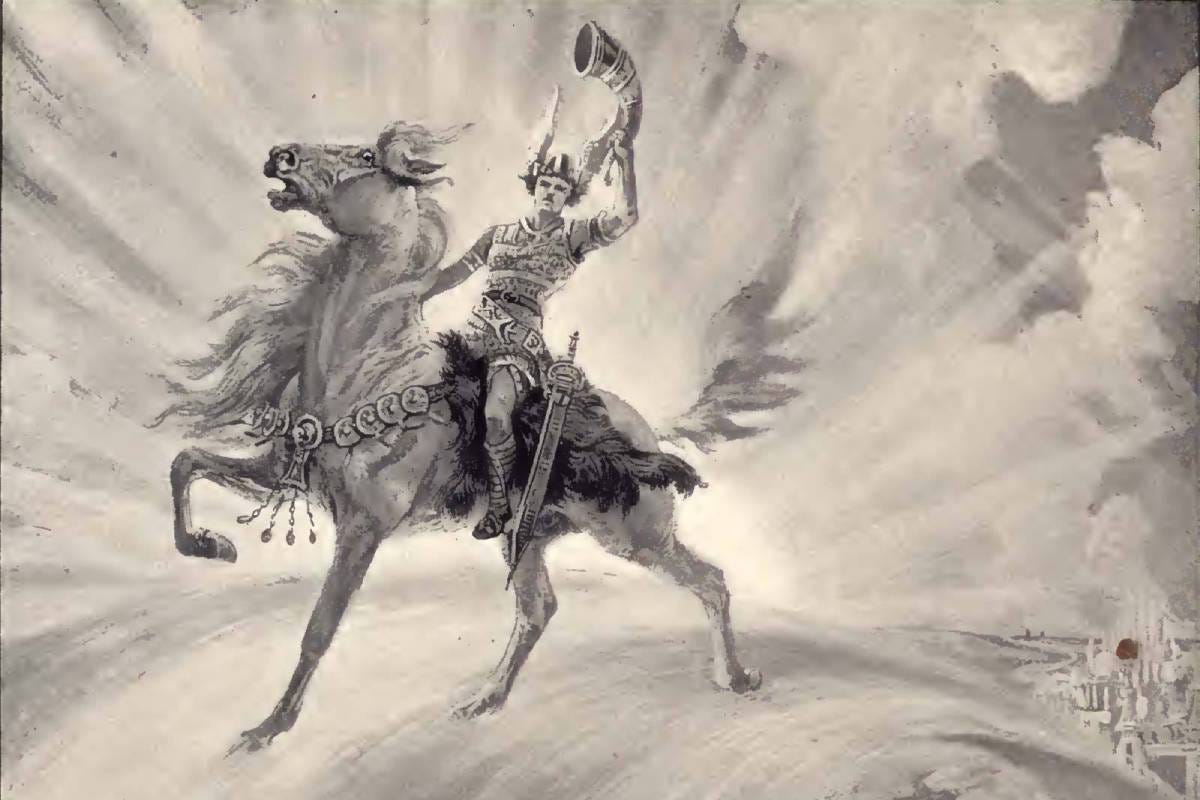
What are the highest virtues of the Germanic man? The answer is: Courage, loyalty, and honor. Of course, courage comes first. One must always be ready to secure life by fighting, spear and shield in hand.
This post is part of series drawing from the wisdom of Jan de Vries’ book “Die geistige Welt der Germanen”, or the spiritual world of the Germanic peoples.
Among the Germanic peoples, there is no distinction between civilian and warrior. In the old time, every man was expected to fight for his right. Even for the poet, wounded in battle, there was no greater end than to praise his King one last time.
Germanic song lauds the courageous test in battle, not the untiring work of the farmer. What counts are powerful blows, not the laborer’s diligent work.
Though slaves (thralls) were described as having a swarthy appearance, dirty black nails and bent backs from doing hard work, the free man was educated in the trades of a warrior.
As it was sung in the Rígsthula, or the Song of the Old, Wise, Mighty, and Strong:
There at home
Jarl grew up,
learned the shield to shake,
to fix the string,
the bow to bend,
arrows to shaft,
javelins to hurl,
spears to brandish,
horses to ride,
dogs to let slip,
swords to draw,
swimming to practice.
Free men are expected to develop their bodies for combat, and to never shy away from an opportunity to make use of their fighting will. The slave bows to his conqueror, whereas the warrior secures his freedom.
The warriors have died out in this day snd age. They’re the 1%.
No one is ready for the consequences of taking action and the reprocusions of it…
But men like us are being made in real life.
Hard times make weak men, easy times make hard man😄