


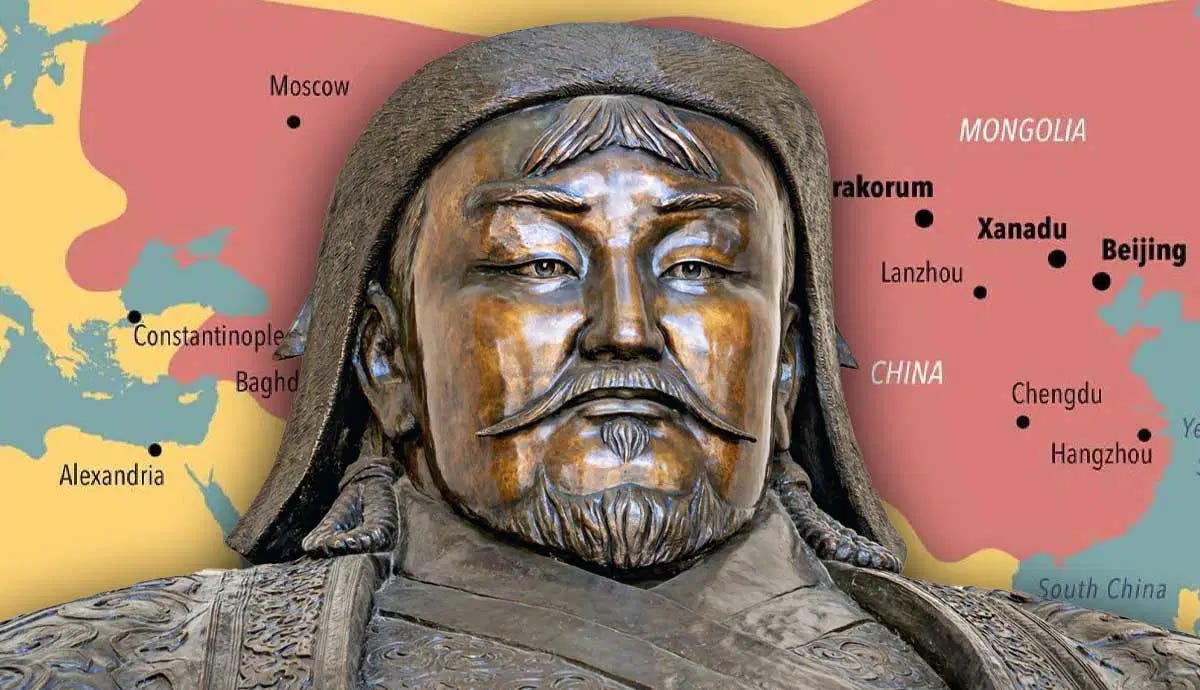
Yesterday, the leader of Israel, Benjamin Netanyahu, gave a press conference, through from the looks of it, he was hiding somewhere in a bunker in Tora Bora, and said,
“Jesus Christ has no advantage over Genghis Khan. Because if you are strong enough, ruthless enough, powerful enough, evil will overcome good.”
Let’s not pretend that this is automatically true. Khan did not overcome Christ. No one today is a follower of Ghenghis Khan, but billions of people are still meaningfully influenced by Christ’s messages.
Some may want to point out that Netanyahu’s statement was supposed to be a reference to a line by American historian Will Durant, who actually said that “the universe has no prejudice in favor of Christ as against Ghenghis Khan”.
But Durant didn’t speak of some inevitability that a “ruthless enough” evil must consequentially always overthrow good. Will Durant’s quote was, in fact, preceded by the following words:
“Nature and history do not agree with our conceptions of good and bad; they define good as that which survives, and bad as that which goes under ...”
It was Ghenghis Khan who went under, and it was Christ, who, through his resurrection, survived.
More importantly, it is Christ’s legacy of which people speak favorably, whereas the Mongol invaders of 1240 AD are remembered unfavorably.
The English Benedictine monk Matthew Paris, a contemporary chronicler writing around the time when the Mongols invaded Poland and Hungary, described them as follows:
“an immense horde of that detestable race of Satan... thirsting after and drinking blood, and tearing and devouring the flesh of dogs and human beings indiscriminately”
Evil, then, cannot hide its face. And good does not go unrecognized, because people have memory, and what was good or evil will be remembered as such, regardless of which side prevails in history.
People will forever remember Israel as having started this war with Iran, upsetting the whole global economy by harming oil and gas trade, by bombing oil and gas fields, and by provoking their enemy Iran to do the same in retaliation, while lying about the tally of Israeli and American casualties of war, and denying responsibility for killing civilians.
Might we interpret Netanyahu’s words differently, namely as a veiled threat? Perhaps the leader of Israel fancies himself a Ghenghis Khan, harboring a desire to overcome the weak Christian Europe?
If only Israel were “strong enough, ruthless enough, powerful enough”, its soldiers might become “an immense horde... thirsting after and drinking blood”.