


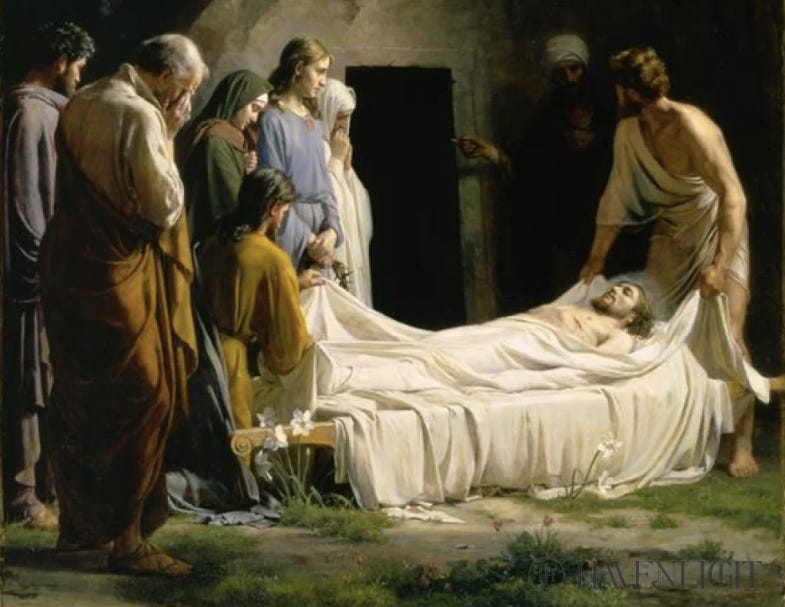
In my earlier article on Re-Enchanting the West, I introduced the notion of sacred space. Borders used to be sacred, hallowed by priests. But the de-sacralization of Medieval space that happened after the French and Industrial Revolutions closed heaven’s doors. It condemned humanity to hide itself within the cyberspace of internet technology. It’s time to break out of the machines holding us captive.
In 1999, BBC 4’s Melvyn Bragg hosted a podcast titled Space in Religion and Science with British theologian John Polkinghorne and Australian science writer Margaret Wertheim. They had a lively debate about the meaning of this new thing called cyberspace. It was a place that early internet lovers said could perhaps, one day, host their souls.
Back in the day, in movies such as Tron or The Lawnmower Man, the ancient cyberspace was being portrayed as a possible heaven for humanity, a place to transcend the limitations of our physical bodies, perhaps even to do away with physical reality altogether. Some saw in cyberspace the potential to create a ‘real’ heaven, unlike what the Four Horsemen of Militant Atheism (Dennet, Dawkins, Harris, and Hitchens) would call religious dogma.
This was a time when people started fantasizing about the possibility of using computer technology to create new universes. To create our own heaven with the use of technology in the hands of ordinary man—that was the goal! Men were going to be gods. We were going to live forever after uploading our minds to the internet, hosting our souls on data centers (coincidentally controlled by “job-creating” capitalists), as a promise sold to us by commercial marketeers.
You just had to imagine it.
