


Over 2,000 years ago, a girl from the forests of North-Western Germany was arranged to be married to an ugly, fat, 50-year-old man from Syria.
He was general Varus, previously stationed in Syria, now commanding three Roman legions in Germany. The girl’s father, Segestes, wanted to forge a deal between the Germans and the Romans. And so, he handed off his daughter in exchange for a house in Gaul.
She was just 16-years-old, forced to live at the Romans’ encampment as a tribute. Her name was Thusnelda, as reported by the Greek historian Strabo, though he must have misunderstood her Germanic name, which was undoubtedly “Thuruzhilda”, or Thor’s battle maid.
She must have been seething with rage, as the Norse goddess Freya in the Lay of Thrym, whose angry neck burst her necklace, but who would save her?
A 23-year-old man named Arminius also lived at this Roman camp, his name referring to his fiery blue eyes. He was Germanic, like her, and had risen through the Romans’ ranks as a mercenary after his father’s death. Velleius Paterculus attests Arminis was with the Romans fighting Rome’s enemies in Pannonia.
However, upon learning of the Roman plan to subdue his sacred Germania, he devised a plot to thwart the Roman advance.
Under these circumstances, Arminius and Thusnelda fell in love. Just two years later, Arminius won the general’s trust and convinced Varus to quell an uprising in the territories of the Marsi and Tencteri tribes.
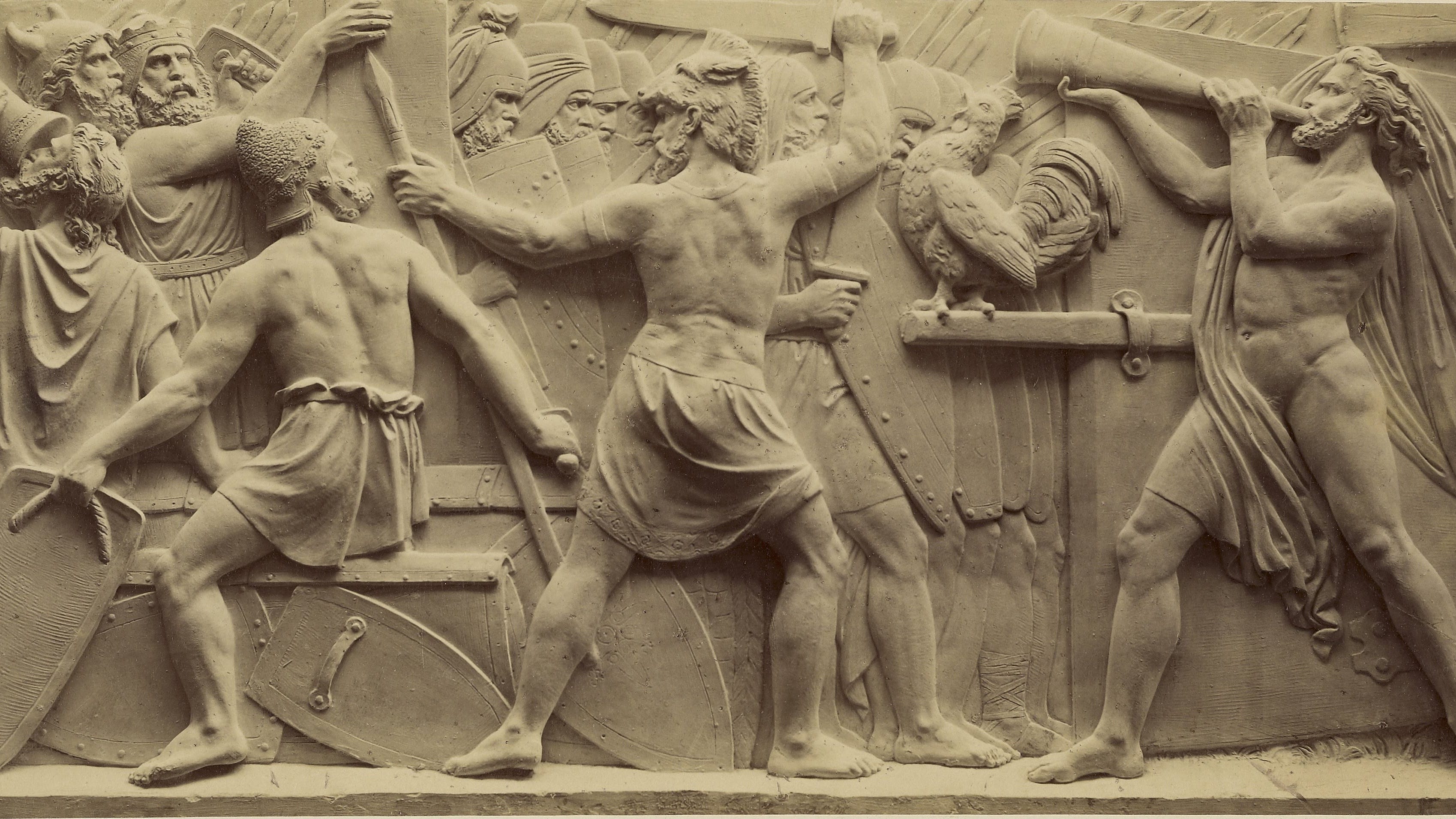
But it was a trick. And Varus took the bait. On that fated day, a long-winding colon of legionnaires could be seen marching through the Teutoburg forest. The soldiers took a detour from their planned route back to their summer camp along the well-known Helweg.
And then, for four consecutive days, the Germans ambushed the Romans, slaughtering not only the ~14,000 soldiers, but also their ~7,000-strong support staff, leaving not a single survivor.
At age 25, Thusnelda gave birth to Arminius’ only son, Thumelicus, before she was kidnapped and dragged off to Ravenna in Italy, after having been paraded through the city of Rome as a captive of war.
Separated, Arminius was eventually assassinated at age 37. But the couple’s lives had already changed the course of history.
These two, Arminius and Thusnelda, are why Germans today are still speaking German instead of vulgar Latin. Without them, the Reformation of 1517 would never have happened, and Protestant Germanics would never have left Europe to found the United States.